

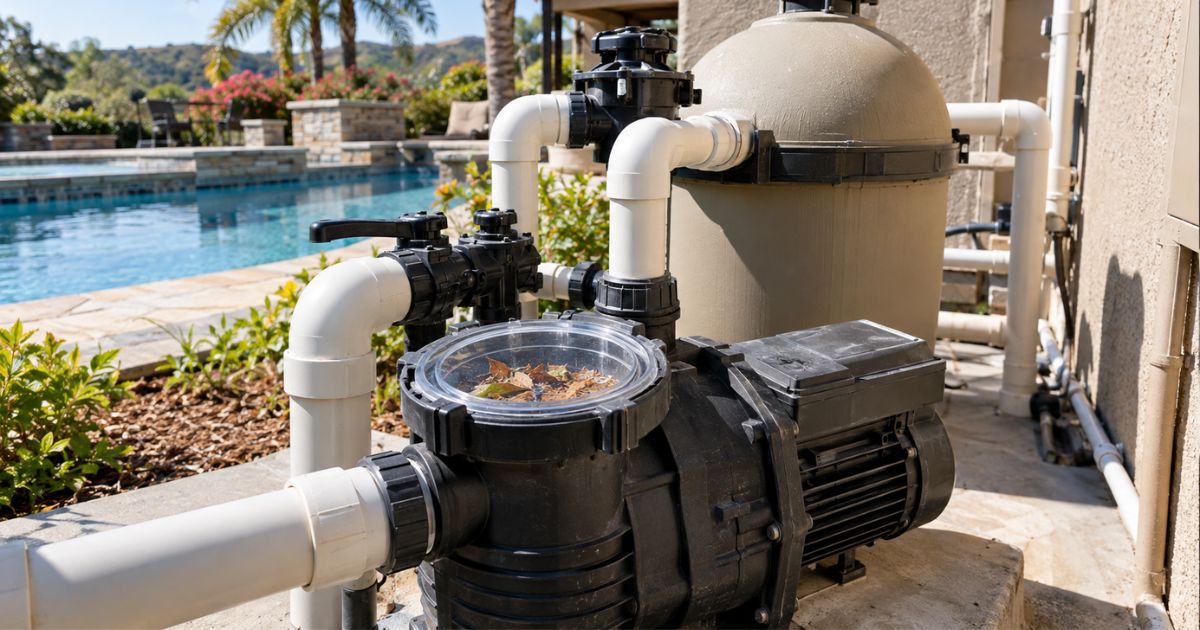
A swimming pool depends on consistent water circulation to support filtration, chemical distribution, and overall water quality. When a pool pump appears to be running but little or no water is moving through the system, homeowners may notice weak return jets, air bubbles, or changes in filter pressure.
A pool pump running but not circulating water can indicate several different problems, ranging from a clogged basket to an air leak or malfunctioning pump component. Although some issues have straightforward causes, others require professional inspection to prevent further equipment damage.
Understanding how pool circulation works, recognizing common warning signs, and knowing when to seek repairs can help homeowners address problems before they become more complicated.
Understanding How Pool Water Circulation Works
A pool circulation system relies on several interconnected components. The pump draws water through the skimmer and other designated suction outlets, moves it through the filtration system, and returns the filtered water to the swimming pool.
The pump motor drives an impeller that creates the water movement necessary for circulation. Filters remove suspended debris as water passes through the system, while valves regulate flow through different plumbing connections.
When one component becomes obstructed or stops functioning correctly, circulation may decrease even though the pump motor continues operating.
Because pumps, filters, and plumbing work together, identifying the actual cause requires examining the system rather than assuming the pump itself has failed.
Common Reasons Your Pool Pump Is Running but Not Circulating Water
Several mechanical, plumbing, and maintenance-related problems can interrupt water circulation, even when the pump appears to be running normally. Understanding these common causes can help homeowners identify potential issues and determine whether basic maintenance or professional repair is needed.
Low Pool Water Level
Insufficient pool water is one of the first conditions worth checking.
When the water level falls too low, the skimmer may draw air into the suction plumbing instead of maintaining a consistent water supply. This can interfere with pump priming and reduce circulation.
Homeowners may notice air entering the pump basket or bubbles returning to the pool.
Possible solution: Check the water level against the skimmer opening and follow the equipment manufacturer’s recommended operating level. If the pump has been drawing air, additional priming may be necessary.
Clogged Skimmer or Pump Basket
Skimmer and pump baskets collect leaves, insects, and other debris before they reach sensitive equipment.
When excessive debris accumulates, it restricts water movement and may reduce the amount of water reaching the pump.
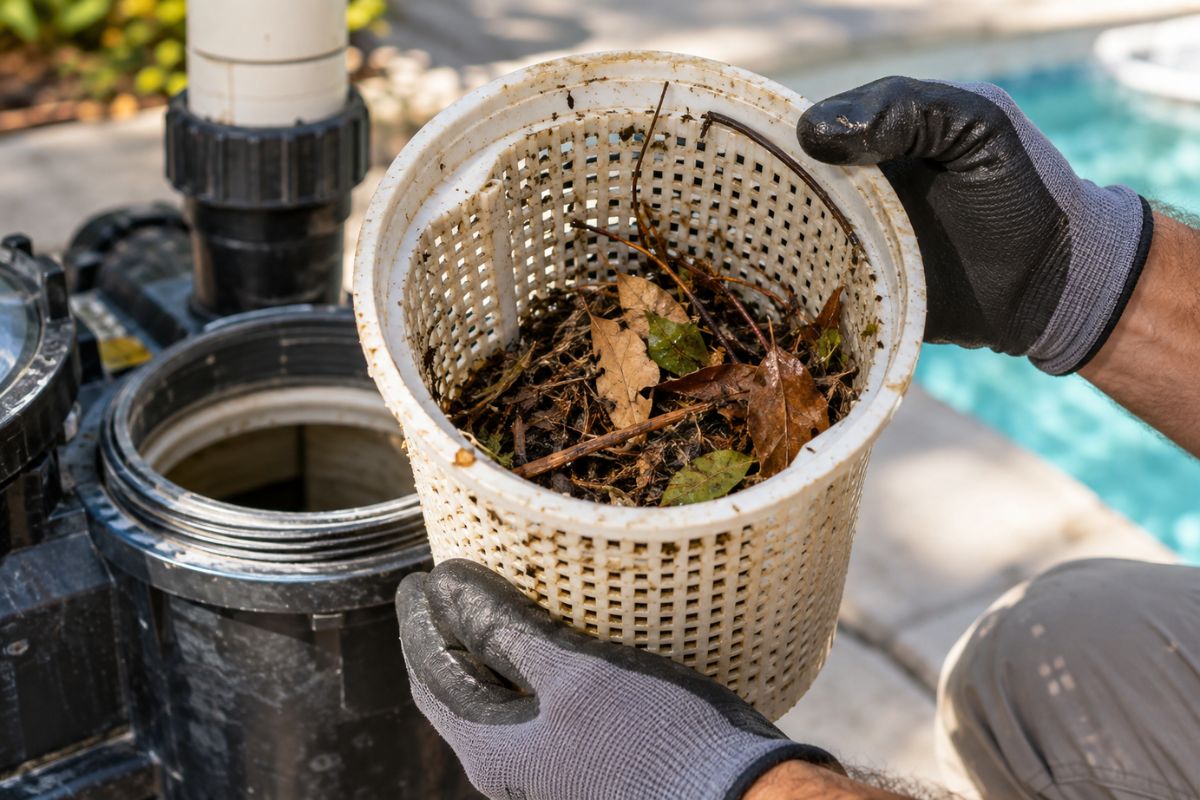
Common signs include weak return flow, visible debris buildup, and changes in pump performance.
Possible solution: Turn off the pump and follow the manufacturer’s instructions for cleaning accessible baskets. Never open a pump housing while the equipment is running or pressurized.
Pool Pump Has Lost Its Prime
Priming refers to establishing the water-filled condition needed for a pool pump to circulate water properly.
A pump that loses its prime may continue running without moving sufficient water. This can happen after maintenance, when the water level becomes too low, or when air enters the suction plumbing.
According to Pentair’s pool pump installation and troubleshooting guide, insufficient water levels and suction-side air leaks can prevent proper priming. Operating a pump without adequate water can also damage its mechanical seal and other components.
Possible solution: Stop the pump if it is operating without water. Follow the specific model’s priming instructions or arrange professional service if it repeatedly loses prime.
Air Leaks in the Suction Line
Suction-side air leaks can interfere with water circulation by allowing air to enter the plumbing before it reaches the pump.
Possible sources include deteriorated pump lid seals, loose plumbing connections, or damaged fittings.
Homeowners may observe persistent air bubbles beneath the transparent pump lid or emerging from return jets. However, bubbles alone do not identify the exact location of a leak.
Possible solution: Inspect accessible components visually with the pump turned off. A professional can evaluate suspected suction leaks, seals, and plumbing connections without unnecessary component replacement.
Dirty or Clogged Pool Filter
A pool filter removes debris from circulating water, but accumulated material can eventually restrict flow.
Cartridge, sand, and diatomaceous earth (DE) filters have different cleaning and servicing requirements.
Reduced return flow and filter-pressure readings outside the equipment’s normal operating range may indicate a filtration restriction.
Possible solution: Check the filter manufacturer’s maintenance recommendations. Cartridge cleaning, backwashing, or professional filter servicing may be appropriate depending on the system.
Advantage Spa & Pool Repair provides pool and spa filter maintenance services, including cleaning and servicing several filter types.
Blocked or Damaged Pump Impeller
The impeller is responsible for moving water through the pump. Debris reaching this component may obstruct its passages and reduce pumping performance.
A damaged or worn impeller can also affect circulation, even when the motor is operating.
Other possible symptoms include reduced flow, unusual operating sounds, or repeated performance problems after routine cleaning.
Possible solution: Have a qualified technician inspect the impeller and surrounding components. Internal pump disassembly involves mechanical and electrical hazards and should not be attempted without appropriate training.
Incorrect Valve Positions or Plumbing Restrictions
Pool plumbing systems use valves to direct water through different suction and return connections.
A closed or incorrectly positioned valve can restrict circulation. Obstructions within pipes or connected equipment may produce similar symptoms.
These problems sometimes appear after equipment servicing or adjustments to the circulation system.
Possible solution: Check whether accessible valve settings match the pool’s documented normal operating configuration. Avoid changing unfamiliar valves while equipment is running.
Variable-Speed Pump Settings
Variable-speed pool pumps operate at adjustable motor speeds, allowing different flow rates for filtration and other equipment functions.
If the programmed speed is too low for a particular system’s requirements, water movement may appear unusually weak.
A setting that works for routine filtration may not be appropriate for priming or operating certain connected equipment.
Possible solution: Review the pump’s operating manual and programmed settings. Persistent circulation problems should not be attributed to speed settings without checking for restrictions and other equipment faults.
Common Pool Circulation Symptoms and Possible Causes
Different warning signs may help narrow down the source of a circulation problem.
Observable symptom | Possible causes |
Pump running with little or no water movement | Lost prime, low water level, suction restriction |
Air bubbles in return jets | Suction-side air leak, low water level |
Weak return jet pressure | Dirty filter, obstructed basket, low pump speed |
Unusual pump noise | Air entering the pump, debris obstruction, mechanical wear |
Repeated loss of prime | Air leak, inadequate water supply, sealing problems |
Filter pressure outside its normal range | Flow restriction, reduced pump output, equipment issue |
These symptoms provide troubleshooting clues rather than definitive diagnoses. More than one issue can produce similar results.
Safe Pool Pump Troubleshooting Steps
Before arranging repairs, homeowners can perform several basic observations without dismantling equipment.
-
Check the water level. Confirm that the skimmer has sufficient water for normal operation.
-
Observe the return jets. Look for reduced flow or persistent air bubbles.
-
Inspect accessible baskets. With equipment shut down, follow manufacturer instructions for checking debris buildup.
-
Review filter pressure. Compare the reading with the system’s established clean-filter baseline, where available.
-
Check visible equipment conditions. Look for external leaks, unusual sounds, or error messages without touching electrical connections.
Avoid operating a pump that appears to be running dry. Never open pressurized equipment, bypass safety devices, or attempt internal electrical repairs.
Pentair’s pool filter safety and maintenance guidance emphasizes monitoring filter pressure, following manufacturer instructions, and taking precautions when servicing pool filtration equipment. Pentair also recommends professional assistance for filter maintenance.
If routine observations do not reveal the problem, professional diagnosis is the safer next step.
When to Call a Professional for Pool Pump Repair
Some circulation issues require specialized tools and knowledge of pool hydraulic and electrical systems.
Professional inspection is especially appropriate when:
-
The pump repeatedly loses prime.
-
Circulation remains poor after accessible baskets are cleaned.
-
Water leaks appear around pump or plumbing connections.
-
The pump produces persistent grinding or other unusual noises.
-
Error messages or electrical problems occur.
-
Internal components may be obstructed or damaged.
A technician can assess the pump, filter, plumbing, and associated controls to determine whether servicing, component replacement, or additional troubleshooting is needed.
For homeowners in Temecula, Murrieta, and surrounding service areas, Advantage Spa & Pool Repair offers equipment troubleshooting and pool pump and filter repair services.
How Regular Maintenance Helps Prevent Circulation Problems
Routine maintenance can reduce the likelihood of preventable water-flow restrictions and make developing problems easier to identify.
Useful practices include keeping skimmer baskets clear, maintaining an appropriate water level, monitoring filter condition, and checking for visible leaks.
Homeowners should also become familiar with normal return flow, pump operating sounds, and filter pressure readings for their particular system.
Maintenance requirements vary according to equipment type, pool usage, environmental conditions, and manufacturer recommendations.
Regular attention does not prevent every mechanical failure, but it can help reveal problems before they cause prolonged interruptions.
Final Thoughts
A pool pump running without properly circulating water does not necessarily mean the entire pump needs replacement. Low water levels, clogged baskets, lost prime, air leaks, filtration restrictions, and mechanical faults can all affect water movement.
Recognizing warning signs and avoiding unsafe troubleshooting practices are important first steps toward restoring circulation.
Advantage Spa & Pool Repair serves homeowners throughout Temecula, Murrieta, and surrounding areas with pool equipment repair and maintenance services.
If your pool pump continues running without adequate circulation, request an appointment with Advantage Spa & Pool Repair to discuss professional equipment diagnosis and repair.
Frequently Asked Questions
Why is my pool pump running but no water is coming out?
Possible causes include lost prime, low pool water level, blocked suction plumbing, or an obstructed impeller. The exact cause depends on the equipment and operating conditions.
Can a dirty pool filter cause poor water circulation?
Yes. Accumulated debris in a filter can restrict flow. Cleaning or servicing the filter according to manufacturer recommendations may help restore normal circulation.
Is it safe to run a pool pump without water?
No. Running a pump dry can damage mechanical seals and other components. Stop the equipment and address the water-supply or priming problem before restarting it.
Why does my pool pump keep losing prime?
Repeated loss of prime may result from suction-side air leaks, insufficient pool water, or problems with pump lid seals and plumbing connections.
When should I replace my pool pump instead of repairing it?
Replacement may be appropriate when major components are damaged, repair parts are unavailable, or the cost and condition of the existing equipment make repair impractical. A professional inspection can help determine the appropriate option.