

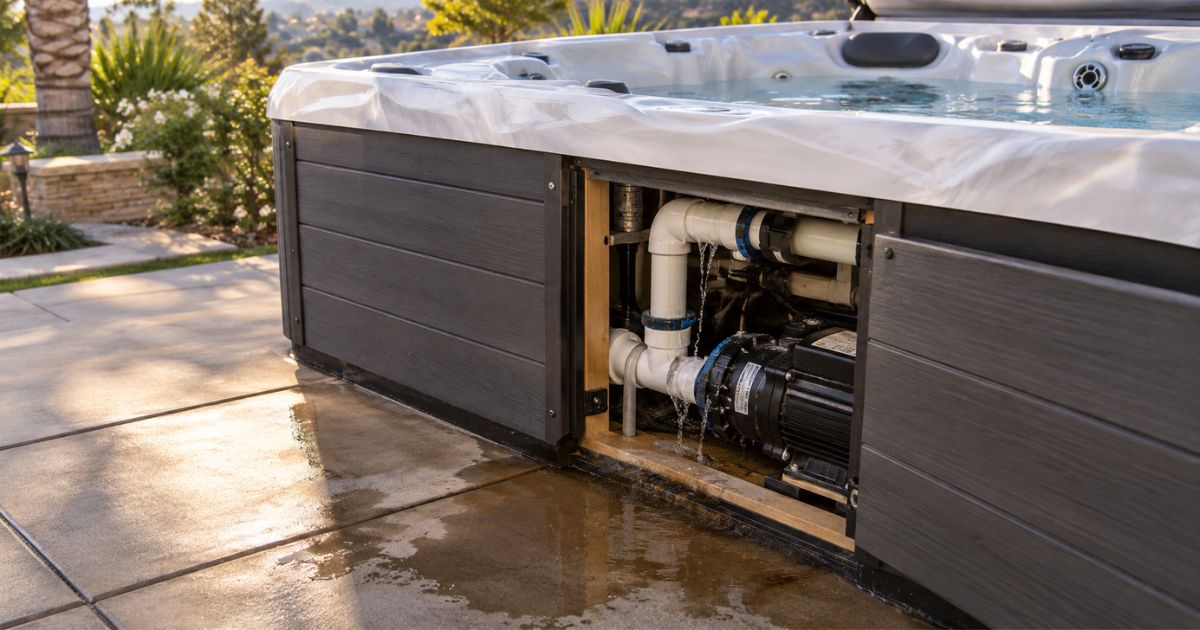
A hot tub should maintain a reasonably consistent water level during normal operation, aside from water lost through evaporation, splashing, and regular use. When the water level drops unexpectedly or moisture collects around the equipment, homeowners may begin wondering whether their hot tub has developed a leak.
A hot tub leaking from its plumbing, pump, jets, or shell can create ongoing water loss and interfere with normal operation. Some issues involve accessible fittings or worn seals, while others may be hidden behind panels or insulation.
Understanding the common causes of hot tub leaks, recognizing warning signs, and knowing when professional inspection is necessary can help homeowners make informed repair decisions.
Understanding Why Hot Tubs Lose Water
Not every decrease in a hot tub’s water level indicates damaged equipment. Evaporation, splashing during use, and water carried away on bathers can contribute to gradual water loss.
However, persistent or unexplained changes deserve closer attention, particularly when accompanied by standing water or damp equipment.
Portable hot tubs contain several interconnected systems, including pumps, heaters, jets, plumbing lines, and sealing components. Water circulates through these connections during operation, creating multiple locations where leaks may develop.
The source is not always directly beneath the visible puddle. Water can travel along pipes, insulation, or cabinet surfaces before reaching the ground.
Common Causes of Hot Tub Leaks
Hot tub leaks can develop in different components depending on equipment condition, installation, maintenance, and normal wear. Identifying the affected area is important because similar symptoms may require different repairs.
Worn or Damaged Pump Seals
Hot tub pumps circulate water through the spa’s plumbing and jet systems. Mechanical seals help prevent water from escaping around the pump shaft.
Over time, these seals may deteriorate or become damaged, allowing moisture to escape around the pump assembly.
Homeowners may notice water collecting beneath the equipment compartment or around the pump housing.
Possible solution: A qualified technician can inspect the pump and determine whether replacing the seal or repairing another component is appropriate. A leaking pump does not automatically require complete replacement.
Loose Plumbing Connections and Unions
Hot tubs use plumbing unions and fittings to connect pumps, heaters, and other equipment.
Loose connections, deteriorated sealing rings, or damaged fittings can allow water to escape. These issues may develop after equipment servicing, component replacement, or prolonged use.
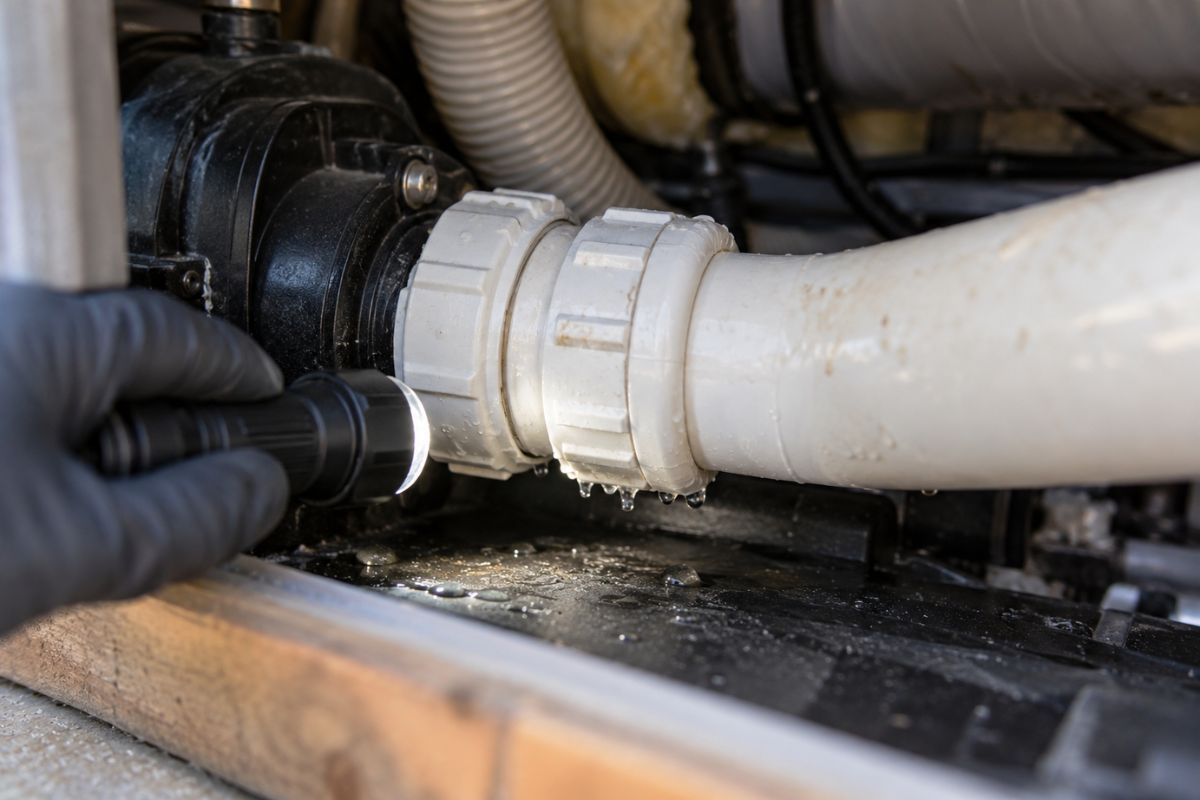
Some manufacturers specifically identify pump union connections as components requiring inspection. The Hot Spring Spas owner’s manual discusses checking pump unions for secure connections to prevent leaks.
Possible solution: Have the affected connection inspected with the equipment safely shut down. Damaged seals or fittings may require replacement rather than excessive tightening.
Leaking Jets and Jet Fittings
Spa jets direct water into the hot tub through openings in the shell. The fittings and seals around these openings help maintain a watertight connection.
When a seal deteriorates or a fitting becomes damaged, water may escape behind the shell.
Leaks around jets can be difficult to identify because surrounding insulation and cabinetry may conceal the affected area.
Possible solution: Professional inspection can help determine whether the issue involves a jet seal, fitting, or connected plumbing. The appropriate repair depends on the specific spa design.
Cracked or Damaged Spa Plumbing
Hot tub plumbing consists of pipes, flexible tubing, manifolds, and fittings that carry water between components.
Physical damage, material deterioration, freezing conditions, or stressed connections can contribute to plumbing leaks.
Depending on the location, escaping water may appear near the spa cabinet or collect beneath the tub.
Possible solution: Damaged plumbing generally requires identifying the affected section and selecting an appropriate repair. Avoid using household adhesives or temporary sealants without confirming their suitability for the plumbing materials.
Advantage Spa & Pool Repair advertises portable spa plumbing and leak repair services, including work involving pipes, manifolds, valves, and fittings.
Heater and Equipment Connections
Water passes through heater assemblies and associated plumbing during normal hot tub operation.
Leaks can develop around heater unions, connection points, or other water-containing equipment components.
Because these assemblies may be located near electrical controls and wiring, visible moisture in the equipment compartment requires particular caution.
Possible solution: Turn off power at the appropriate disconnect or breaker when water is present near electrical equipment. A qualified professional should assess the affected components before the spa is operated again.
Cracks or Damage in the Hot Tub Shell
The hot tub shell contains the bathing water and supports jets, fittings, and other installed components.
Cracks or damage may allow water to escape, particularly when the affected area extends through the shell or compromises a sealed opening.
However, visible surface marks do not always indicate a through-shell leak.
Jacuzzi’s guidance on evaluating used hot tubs identifies shell cracks, water leaks, damp access panels, and damaged supporting components as conditions worth investigating.
Possible solution: Have suspected shell damage evaluated before attempting a cosmetic repair. Some cracks may be repairable, but suitability depends on the material, location, and extent of damage.
Drain Valves and Other Sealing Components
Most portable hot tubs include a drain connection for removing water during maintenance.
A drain cap, valve, or associated seal that does not close properly may allow water to escape slowly.
Other sealing components around connected equipment can also deteriorate.
Possible solution: Visually inspect accessible drain connections without dismantling equipment. If the source cannot be confirmed or the leak persists, arrange professional inspection.
Signs Your Hot Tub May Have a Leak
Not all hot tub leaks produce obvious streams of water. Some develop gradually or remain concealed within the cabinet.
The following observations may help identify a potential problem.
Warning sign | Possible explanation |
Water level repeatedly drops | Leak, evaporation, or water displaced during use |
Standing water beneath the spa | Plumbing, pump, drain, or shell leak |
Moisture around pump connections | Damaged seal, union, or fitting |
Damp cabinet or insulation | Water escaping from a concealed component |
Water appears during jet operation | Possible leak in a pressurized connection |
These symptoms are general indicators, not definitive diagnoses. For example, water beneath an outdoor spa may also come from rain, irrigation, or recent cleaning.
Tracking when and where moisture appears can provide helpful information during a professional inspection.
How to Check for a Hot Tub Leak Safely
Homeowners can perform several basic observations before requesting repairs.
Monitor the water level. Note whether water loss continues under similar conditions when the spa is covered and not being used.
Check the surrounding area. Look for recurring puddles or damp surfaces near the cabinet.
Inspect accessible exterior connections. Look for moisture around visible drain caps or fittings without removing equipment.
Observe operating patterns. Note whether water loss appears worse after jets or circulation equipment have been operating.
Record visible symptoms. Photographs and notes can help a technician understand where the issue may be developing.
Avoid entering a wet equipment compartment or handling wiring, pumps, and heater components. Shut off electrical power at the appropriate breaker or disconnect if leakage presents a potential electrical hazard.
Do not continue operating a hot tub with substantial water loss or suspected electrical exposure.
When Should You Call a Professional for Hot Tub Leak Repair?
Some minor water-loss concerns can be investigated through observation. However, hidden plumbing, equipment, and structural issues require specialized assessment.
Professional hot tub leak repair is appropriate when:
Water levels continue dropping without an identifiable explanation.
Water collects repeatedly beneath the cabinet.
A pump, heater connection, or plumbing fitting appears to be leaking.
Moisture reaches electrical equipment or controls.
Shell damage or concealed plumbing deterioration is suspected.
Water loss continues after accessible exterior components have been checked.
A technician can assess the spa’s condition, identify the likely source, and recommend repairs appropriate for the affected equipment.
For homeowners in Temecula, Murrieta, and surrounding service areas, Advantage Spa & Pool Repair provides plumbing, equipment leak, and portable spa repair services.
Can a Leaking Hot Tub Be Repaired?
Many hot tub leaks can be addressed by repairing or replacing the affected component rather than replacing the entire spa.
Possible repairs include replacing pump seals, servicing plumbing connections, repairing damaged fittings, or addressing certain shell defects.
However, repairability depends on the location of the leak, equipment condition, access to the damaged area, and availability of compatible replacement parts.
A technician may also need to evaluate whether multiple components have deteriorated.
Advantage Spa & Pool Repair lists spa maintenance and shell repair services, including repairs involving cracks, scratches, and blisters.
Professional assessment helps determine whether a targeted repair is practical.
How Regular Maintenance Helps Prevent Hot Tub Leaks
Routine maintenance cannot prevent every leak, but it can help homeowners recognize changes before they become more significant.
Useful practices include maintaining the recommended water level, checking accessible exterior connections for moisture, and following manufacturer instructions for draining, refilling, and seasonal care.
Water chemistry also deserves attention because conditions outside manufacturer recommendations may affect certain spa materials and equipment components.
Regularly observing the cabinet and surrounding ground can help identify unusual moisture patterns.
Importantly, maintenance should focus on safe visual checks rather than opening electrical compartments or dismantling pressurized equipment.
Final Thoughts
A leaking hot tub may have a worn pump seal, loose plumbing connection, damaged jet fitting, cracked pipe, compromised drain valve, or shell-related problem.
The location of visible moisture can provide useful clues, but professional diagnosis is often necessary to identify the actual source.
Homeowners should avoid operating equipment when water loss is significant or electrical components may be exposed to moisture.
Advantage Spa & Pool Repair provides portable spa and equipment repair services throughout Temecula, Murrieta, and surrounding communities.
If your spa continues losing water, request an appointment with Advantage Spa & Pool Repair to discuss professional leak inspection and repair options.
Frequently Asked Questions
Why is my hot tub leaking from underneath?
Water beneath a hot tub may come from pump seals, plumbing connections, jet fittings, drain valves, or shell damage. The visible puddle may not identify the precise leak location.
Can a hot tub leak only when the jets are running?
Yes. Some leaks become more noticeable when pumps operate and water flows through pressurized plumbing connections. However, this pattern alone cannot establish the cause.
Is it safe to use a leaking hot tub?
Avoid using a hot tub with significant water loss or moisture near electrical equipment. Shut off power safely and arrange professional assessment when necessary.
Can a cracked hot tub shell be repaired?
Some shell defects can be repaired, depending on the material, location, and extent of damage. A professional inspection is necessary to determine whether repair is appropriate.
Should I repair or replace a leaking hot tub?
The decision depends on the leak source, equipment condition, repair accessibility, and replacement-part availability. A professional diagnosis can help identify the most practical option.